Home · Costs & Insurance
What HVAC work costs in Plainfield, and how the steam question is priced
How much does HVAC repair or replacement cost in Plainfield, and who works on steam heat?
Plainfield prices cannot be read off a national table until the house declares its architecture, because this city's heating runs on three different systems wearing one trade name. A steam repair is priced on pressure, water line, vents, and traps, by the hybrid bench that specializes in it, one Watchung Avenue firm having named gas steam work as its specialism since 1986. A forced-air repair in a retrofitted house is priced on airflow, electrical, and charge, like anywhere else. A conversion is priced twice, both paths, or it is not priced at all. The guides frame the outer numbers, diagnosis at $75 to $200, common components at $150 to $650, replacement at $5,000 to $12,500 or more, but the Plainfield figure that matters is the one written after the system type is named and measured, by the bench that works on that system every week.
Plainfield pricing starts with the house's original century. A forced-air repair in a retrofitted house, a steam repair in a radiator house, and a conversion that weighs both systems are three scopes sharing one trade name in this city. Published national guides put the diagnostic visit at $75 to $200, most single components between $150 and $650, refrigerant and compressor work above that band, and full replacement at $5,000 to $12,500 or more installed. The Plainfield variables are the honest local ones: which heating architecture the house has, whether its bench is the hybrid bench this stock requires, and whether a conversion quote prices the path not taken as faithfully as the path sold. A total that arrives before the system type is named is a guess.
Compiled from published national guides and local data; reviewed by the Cedar Brook Heating and Air research team. Last reviewed November 16, 2026.
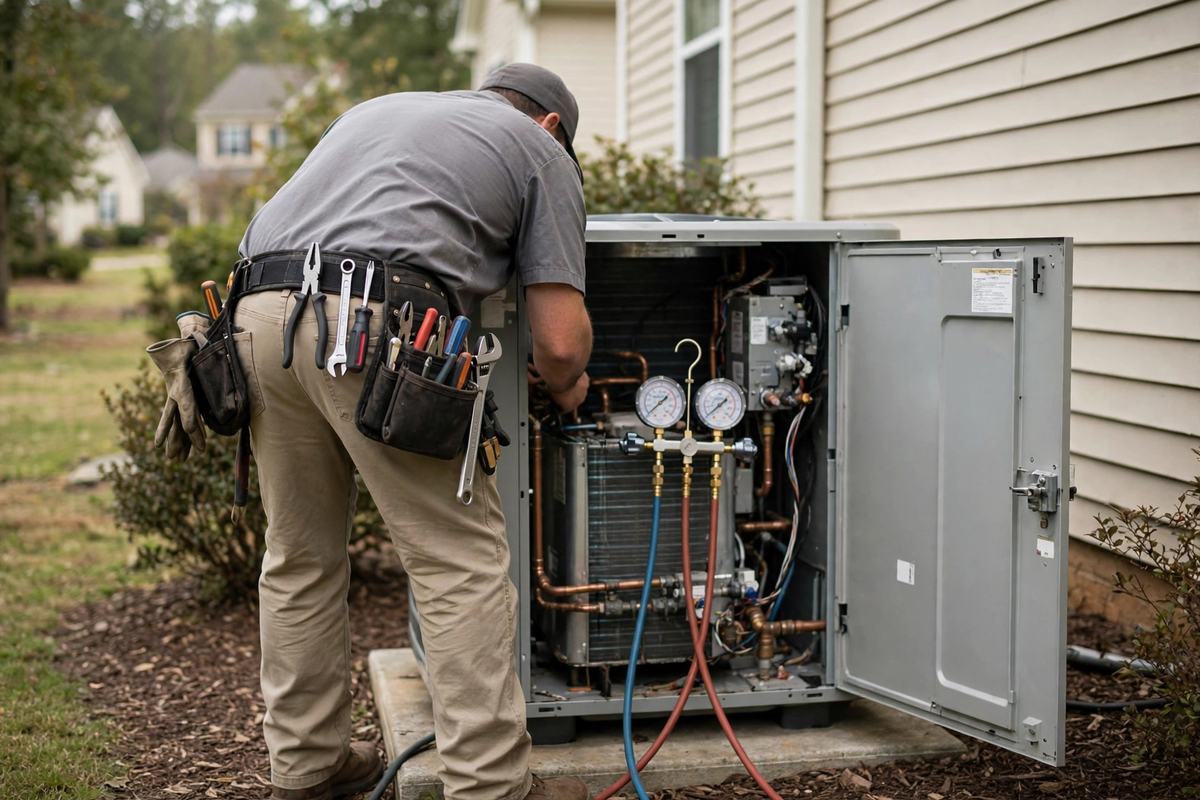
Typical cost ranges
| Job | Typical range | What moves it |
|---|---|---|
| Diagnostic visit (failure named with readings) | $75 to $200 | Steam visits read pressure, water line, and vents; forced-air visits read airflow, electrical, and charge. The readings are the deliverable. |
| Standard component repair (either architecture) | $150 to $650 | Ignition, sensors, traps, vents, capacitors, and motors in the common band; boiler and steam specialty parts priced by name. |
| Refrigerant leak repair and recharge | $450 to $1,200 | Low charge means a leak to find; refrigerant is never consumed by a sealed system. |
| Full system replacement (installed) | $5,000 to $12,500+ | Load, distribution, and the house's architecture stated in the scope; conversion paths priced side by side where both exist. |
| Ductless mini-split installation (per zone) | $3,000 to $6,500 | Priced per zone against the rooms it truly serves; in radiator houses, honestly scoped as cooling and shoulder-season heat. |
Ranges are published guide figures, not a quote for your home. Your estimate is written after a measured diagnosis and should name the system architecture, the failed component or finding, and the readings behind both.
How insurance pays for this work
The deductible question
HVAC wear is rarely an insurance matter in Plainfield either, with the same exception as everywhere: sudden external causes, lightning, storm, or a freeze event that bursts pipes when heat fails, where the no-heat call's documentation and timing become part of a larger claim. That is one more reason the cold-snap call should be made and logged early: in a steam house, the heating failure and the plumbing loss are one event with two invoices, and the file should show they were answered as one.
Request a callback
Prefer to talk later? Leave your details and an independent local pro will call you back. No charge to you, no obligation.
Cedar Brook Heating and Air is a free referral service. Submitting this form connects you with independent local contractors who provide the work.